







In today’s digital age, cybercriminals are getting craftier than a fox in a henhouse when it comes to targeting financial institutions. Banks face an ever-growing array of threats, from sophisticated ransomware attacks to cunning social engineering schemes that could make even Ocean’s Eleven look amateur.
With cybercrime costs projected to hit $10.5 trillion annually by 2025, banks can’t afford to play catch-up with their security measures. Modern financial institutions must navigate a complex web of digital threats while maintaining customer trust and protecting billions in assets. It’s like trying to guard Fort Knox – except the thieves don’t need dynamite anymore, just a clever line of code and a wifi connection.
Understanding Modern Bank Cybersecurity Threats
Banking institutions face sophisticated cyber threats that evolve rapidly with technological advancements. Cybercriminals target financial organizations through multiple attack vectors to compromise security systems and gain unauthorized access to sensitive data.
Common Attack Vectors in Banking
Financial institutions encounter several prevalent attack methods targeting their infrastructure:
- Phishing Campaigns target employees with fraudulent emails impersonating trusted entities like vendors, customers or regulatory bodies
- SQL Injection Attacks exploit vulnerabilities in web applications to access backend databases containing customer records
- Distributed Denial of Service (DDoS) floods banking networks with traffic to disrupt online services and create openings for data theft
- Malware Deployment introduces trojans, ransomware or keyloggers through compromised devices or malicious downloads
- API Vulnerabilities expose critical banking functions through insecure application programming interfaces
- Insider Threats leverage authorized access to steal data or funds through employee accounts
Emerging Cyber Risks for Financial Institutions
- Cloud Security Breaches target banking data stored on third-party cloud platforms through misconfigured access controls
- AI-Powered Attacks leverage machine learning to identify system weaknesses and automate cyber intrusions
- Mobile Banking Exploits compromise banking apps through fake versions or malicious code injection
- Quantum Computing Risks threaten to break current encryption standards protecting financial transactions
- Internet of Things (IoT) Vulnerabilities expose networks through connected devices with weak security
- Supply Chain Compromises infiltrate banks through trusted vendors and third-party service providers
Critical Security Controls for Banks
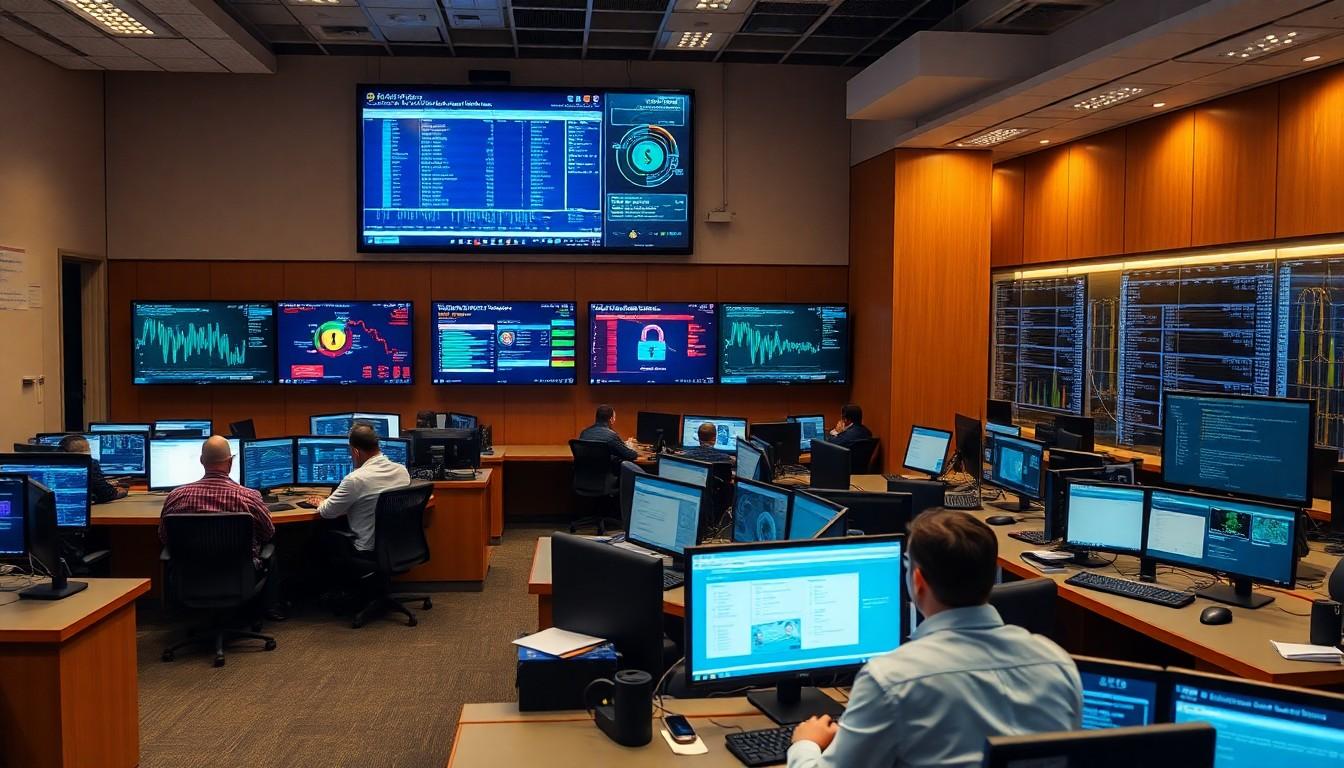
Banks implement layered security controls to protect against sophisticated cyber threats targeting financial assets digital infrastructure. These controls form an integrated defense system that safeguards critical banking operations customer data.
Network Security Infrastructure
Modern banks employ multi-layered network security architectures featuring advanced firewalls intrusion detection systems. Segmented networks isolate critical systems from general operations using virtual local area networks (VLANs). Security information event management (SIEM) platforms monitor network traffic 24/7 for suspicious activities anomalies. Deep packet inspection tools analyze data packets entering exiting the network to identify potential threats. Network access control systems verify authenticate all devices connecting to banking infrastructure.
Access Management Systems
Identity access management (IAM) solutions control authenticate authorize user access to banking systems resources. Multi-factor authentication combines biometrics hardware tokens privileged access credentials. Role-based access control (RBAC) restricts system permissions based on job functions responsibilities. Automated user provisioning deprovisioning processes manage employee contractor access lifecycles. Privileged access management (PAM) tools monitor secure administrative accounts with elevated permissions.
Data Encryption Protocols
Banks utilize AES-256 encryption to protect data at rest in transit across networks storage systems. Transport Layer Security (TLS) 1.3 encrypts all customer communications web transactions. Hardware Security Modules (HSMs) safeguard encryption keys digital certificates. Field-level encryption protects sensitive data elements within databases applications. End-to-end encryption secures mobile banking transactions payment processing systems. Quantum-resistant encryption algorithms prepare banks for future cryptographic threats.
Regulatory Compliance and Standards
Banking institutions operate under strict regulatory frameworks designed to protect financial data and customer assets. These regulations establish minimum security standards and compliance requirements for financial institutions worldwide.
Banking Industry Security Requirements
Financial institutions adhere to specific security mandates from regulatory bodies including the Federal Financial Institutions Examination Council (FFIEC) and the Securities Exchange Commission (SEC). The Gramm-Leach-Bliley Act (GLBA) requires banks to implement comprehensive information security programs with regular risk assessments. Banking organizations maintain:
- Documented security policies aligned with regulatory requirements
- Regular internal audits of security controls
- Data breach notification protocols
- Customer privacy protection measures
- Incident response procedures
- Annual compliance reporting
The Federal Reserve Board enforces specific cybersecurity guidelines through Regulation H while the Office of the Comptroller of the Currency (OCC) mandates risk management frameworks for national banks.
International Security Frameworks
Global banking operations follow standardized security protocols established by international organizations. The Payment Card Industry Data Security Standard (PCI DSS) sets requirements for organizations handling credit card data with 12 core security principles. Key frameworks include:
- ISO/IEC 27001 for information security management
- SWIFT Customer Security Programme (CSP) for international transactions
- Basel Committee guidelines on banking supervision
- NIST Cybersecurity Framework for risk management
- COBIT framework for IT governance
- European Banking Authority (EBA) ICT Guidelines
Financial institutions implement these frameworks through documented policies, technical controls and regular compliance assessments conducted by certified auditors.
Security Incident Response Planning
Financial institutions implement comprehensive incident response plans to detect, contain and mitigate security breaches rapidly. These plans establish clear protocols for addressing cybersecurity incidents while minimizing operational disruptions and financial losses.
Breach Detection Systems
Advanced Security Information and Event Management (SIEM) systems monitor banking networks 24/7 for suspicious activities. These platforms analyze log data from multiple sources including firewalls, servers, applications using machine learning algorithms to identify potential threats. Network behavior analytics tools detect anomalies by establishing baseline patterns for normal operations then flagging deviations. Automated alert systems notify security teams when indicators of compromise appear such as unauthorized access attempts, unusual data transfers or malware signatures. Integration with threat intelligence feeds enables real-time correlation of events with known attack patterns used by cybercriminal groups targeting financial institutions.
Recovery Procedures
Banks maintain encrypted backup systems that store critical data across geographically dispersed locations for rapid recovery. The backup infrastructure includes incremental snapshots taken every 4 hours plus full system backups performed weekly. Incident playbooks outline step-by-step procedures for system restoration prioritizing core banking services like payment processing electronic transfers account access. Dedicated disaster recovery sites feature redundant hardware configurations that mirror production environments enabling failover within 15 minutes of activation. Regular testing through quarterly disaster recovery drills validates the effectiveness of backup systems procedures documentation.
| Recovery Metric | Target Time |
|---|---|
| Critical Systems Recovery | 15 minutes |
| Data Backup Frequency | Every 4 hours |
| Full System Backup | Weekly |
| Recovery Testing | Quarterly |
Future of Bank Cybersecurity
Banking cybersecurity evolves rapidly with technological advancements transforming threat detection, prevention, and response capabilities. Financial institutions integrate cutting-edge technologies to strengthen their security infrastructure against sophisticated cyber threats.
AI and Machine Learning Applications
AI-powered security systems analyze patterns across banking networks to detect anomalies in real-time. Machine learning algorithms process vast amounts of transaction data to identify fraudulent activities with 99% accuracy rates. Advanced neural networks map customer behavior patterns to establish baseline profiles, flagging deviations that indicate potential account compromises. Security operations centers leverage AI-driven automation to respond to threats within 30 seconds, compared to traditional manual responses taking 5-10 minutes. Natural Language Processing models scan communication channels to detect social engineering attempts, reducing phishing success rates by 85%.
Blockchain Security Solutions
Blockchain technology revolutionizes banking security through decentralized verification systems that prevent unauthorized transactions. Smart contracts automate security protocols, reducing manual verification errors by 95%. Distributed ledger systems create immutable audit trails of all transactions, enabling banks to trace fraudulent activities across multiple touchpoints. Private blockchain networks implement zero-knowledge proofs for transaction validation, preserving customer privacy while maintaining security. Cross-border payment systems utilize blockchain to verify international transfers in 10 seconds, replacing traditional processes that take 2-3 days while enhancing security measures.
Conclusion
Banks must remain vigilant in their cybersecurity efforts as threats continue to evolve and become more sophisticated. The implementation of robust security measures comprehensive incident response plans and adherence to regulatory frameworks are no longer optional but essential components of modern banking operations.
Financial institutions that prioritize cybersecurity investments and embrace emerging technologies like AI blockchain and quantum-resistant encryption will be better positioned to protect their assets and maintain customer trust. As the digital banking landscape expands the future of financial security lies in the hands of those who stay ahead of cybercriminals through continuous innovation and adaptability.